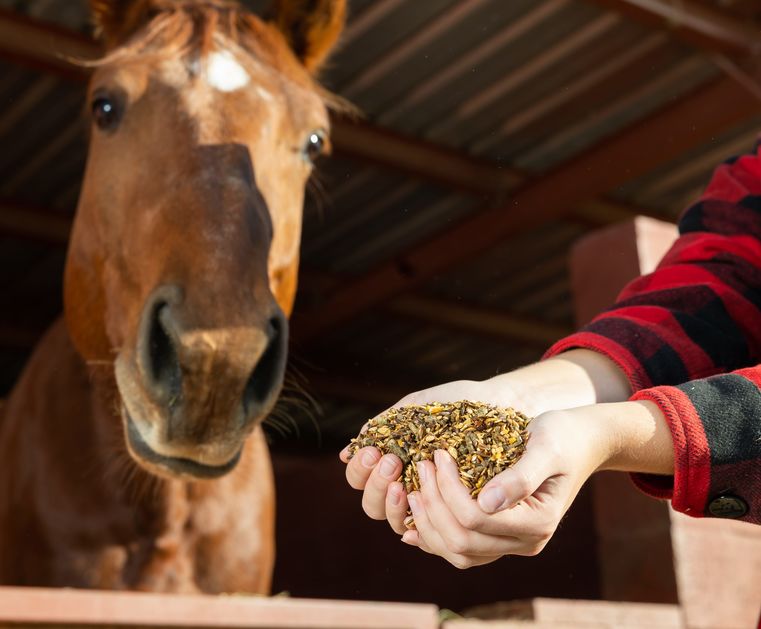

Whatever the reason, changing a horse’s diet too quickly can cause digestive problems. Horses have sensitive digestive systems, so a gradual transition gives their bodies time to adjust. Here are a few things to keep in mind when introducing a new feed.
Make the Change Gradually
Avoid replacing your horse’s old feed with something completely different overnight. A gradual feed transition allows the microorganisms in your horse’s digestive tract time to adapt to the new diet.
One approach is to replace a small portion of the old feed with the new feed and gradually increase that amount over several days. Depending on your horse and the type of dietary change, the transition may take a week or longer.
This applies to more than grain. Introduce changes to hay, forage, and other major parts of the diet carefully.
Pay Attention to Your Horse
Every horse is different, so pay close attention throughout the transition. Monitor how much your horse is eating and drinking as well as their manure, body condition, energy level, and general behavior.
A decreased appetite, diarrhea, signs of abdominal discomfort, or other unusual changes may indicate that your horse is not adjusting well. Slow down the transition if necessary, and contact your veterinarian if you notice signs of illness or significant digestive upset.
Knowing your horse’s normal behavior makes changes easier to spot. Regular activities such as grooming your horse also provide a good opportunity to notice changes in body condition or overall health.
Keep Feeding Times Consistent
Horses generally benefit from a consistent feeding routine. Try to feed at about the same times each day, rather than making sudden changes to both the feed type and the feeding schedule.
When concentrate feed is necessary, smaller, divided meals are generally preferable to one large meal. Your horse should also have reliable access to clean, fresh water.
Treats should remain just that, treats. If you like rewarding your horse between meals, make sure you know which treats are safe for horses and keep them in moderation.
Be Careful When Introducing New Pasture
Feed changes can also happen when horses move between hay and pasture. This is especially important when introducing a horse to lush grass.
Just as you would gradually introduce a new grain or hay, increase pasture access gradually. Certain horses, particularly those with metabolic conditions or a history of laminitis, may require additional pasture management, so talk with your veterinarian about an appropriate plan for your horse.
Ask for Help When You Need It
Your horse’s nutritional needs depend on factors such as age, weight, workload, health, and body condition. If you are making a significant dietary change or are unsure what your horse should be eating, your veterinarian or a qualified equine nutrition professional can help you develop an appropriate feeding plan.
Create a Barn That Supports Your Daily Routine
Good feeding practices are easier when your barn is organized around the way you care for your horses. Convenient feed and hay storage, accessible water, comfortable stalls, and an efficient layout can make everyday feeding and horse care more manageable.
At Deer Creek Structures, we build custom horse barns designed around the needs of horses and their owners. With customizable layouts and tack and feed storage options, we can help you create a barn that makes daily care more convenient while giving your horses a comfortable place to call home. Explore our barn options online or call us at (254) 546-2276 to start planning a structure that works for your property and routine.